It’s been an eventful and fun-filled summer and early fall for me. The common denominator of the various elements is the simple joy of sharing music or life with others. It seems to me that shared experience is a foundational element of joy, and it can take many forms: reading an especially perceptive review of Gethsemane, discovering a poem lament about my ancestor, working through a centuries-old musical form, establishing a connection with a classical music organization in Greece, creating new performance collaborations in the New York area, or hiking with my wife and a new friend in the Lousios Gorge.
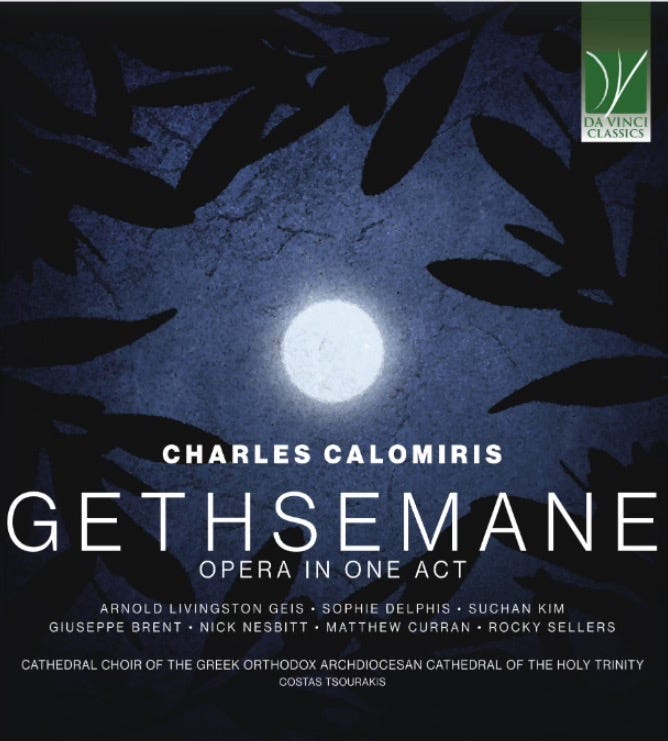
Werner De Smet entitled his Klassiek Centraal review of Gethsemane “The Silence Before the Storm.” It is encouraging to read someone’s writing about the opera that is deeply perceptive of my intent. I cannot resist quoting it at length:
Thanks for reading Pano’s Substack! Subscribe for free to receive new posts and support my work.
There are operas that want to be drama first and foremost, and there are operas that sound primarily like prayer. Charles Calomiris refuses to make that choice in his one-act Gethsemane,… Precisely in that refusal lies the uniqueness of this work. His opera does not want to be an illustrated gospel narrative, but a contemporary meditation in which religious ritual and musical theater meet. The libretto, by the composer himself, chooses a remarkable approach. The evangelists tell us very little about what unfolds during the silent hours in Gethsemane…
Precisely that gap Calomiris fills… Satan mingles almost unnoticed in the thoughts of the disciples. Not a theatrical seducer with thunder and lightning, but a voice that employs reason, fatigue, and apparent common sense. In arias such as Easy for Him and The Only Sensible Choice, that insinuation takes on an almost utilitarian logic: why make a sacrifice that no one understands? Why hold on to a love that gives itself away?
With this, Calomiris touches on the central idea of his opera. Self-sacrificing love proves unimaginable to anyone before the Crucifixion. Not to Satan, who interprets it as weakness, but nor to the apostles, who are mainly concerned with preserving Jesus’ message. Only the deed itself makes its meaning visible. Thus Gethsemane takes on not only the character of a Passion, but equally that of a philosophical reflection on the limits of human reason.
Remarkable is how strongly this dramaturgical vision is also supported musically. Anyone expecting a dark, heavy, and decidedly tragic Passion narrative will be disappointed. Calomiris writes surprisingly melodious and often almost cheerful music. This seems paradoxical at first glance, but works wonderfully. The composer… [concentrates] on…the final hours before the arrest, in which hope, doubt, and human closeness continue to exist side by side. The music thus breathes a warm accessibility without losing its seriousness… through the contemplative calm of the phrasing, the almost iconic simplicity of some vocal lines, and the way the music continually lets the text breathe.
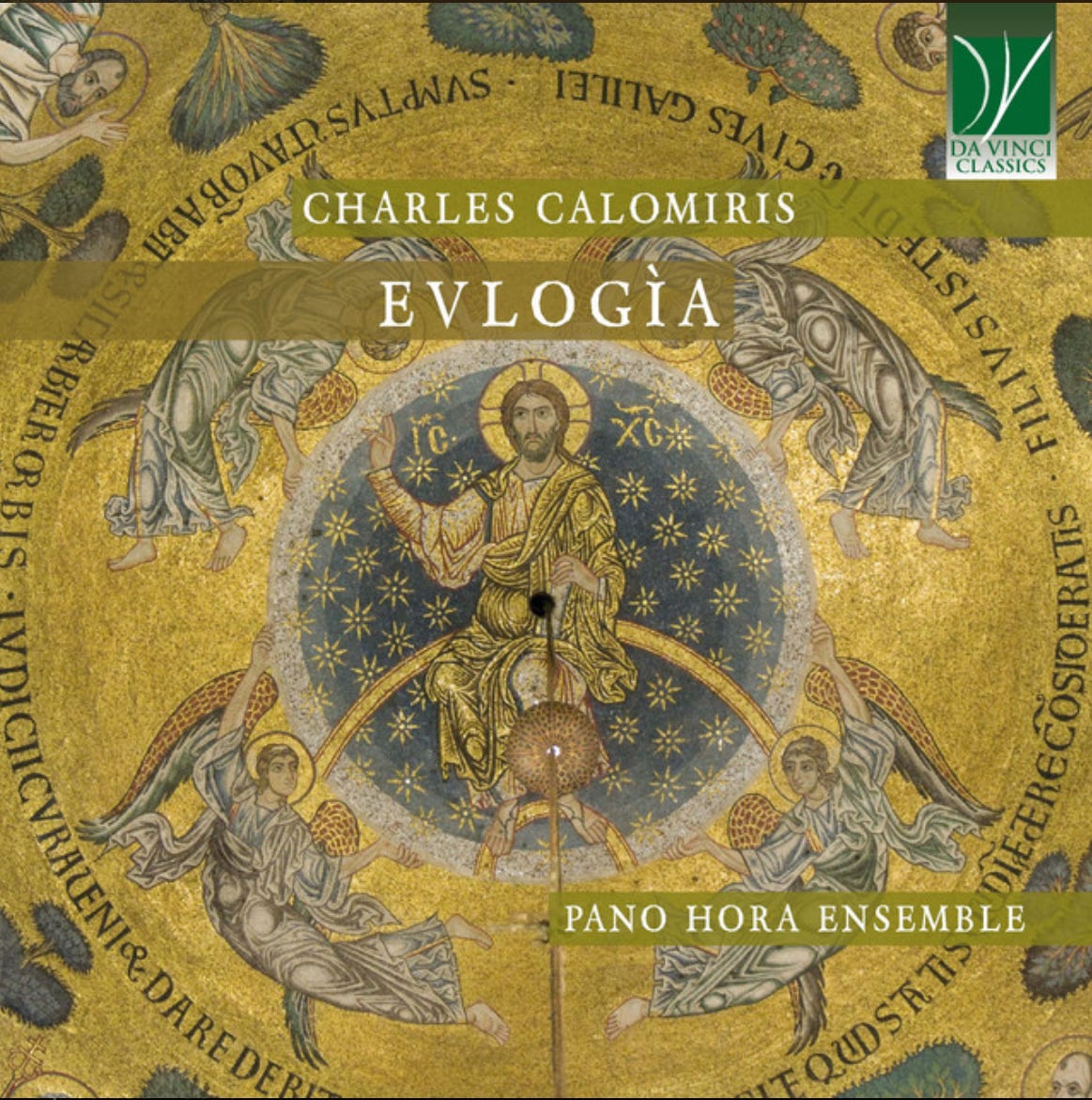
This approach is convincingly realized by the Pano Hora Ensemble and the five soloists. The singing is homogeneous, refined, and remarkably text-focused… the tight ensemble sound underscores the sense of community that is so essential to this opera. The characters remain people of flesh and blood; nowhere do they lapse into bombast or exaggerated operatic effects. Precisely this natural delivery strengthens the credibility of Calomiris and the psychological development of the narrative. The ensemble also plays with audible conviction. The instrumental accompaniment supports the dramatic development without ever lapsing into effect-seeking or crude dramatics. This keeps the contemplative atmosphere, which carries the work from beginning to end, continually intact.
Calomiris does not opt for monumental religious rhetoric, but for a human approach to the decisive moment before the Passion narrative unfolds. His greatest invention may well be that he depicts temptation not as a demonic spectacle, but as the soft voice of fatigue, pragmatism, and compromise. With this, he also deliberately blurs the boundary between opera, oratorio, and liturgical meditation, precisely as the composer intended.
That makes Gethsemane more than a curiosity. It is a contemporary Passion that does not disown its spiritual roots, but translates them into an accessible, melodious musical language. Without seeking to overshadow tradition, Calomiris adds to it a surprisingly personal page.
Another favorable review of Gethsemane also appeared in the September/October edition of Fanfare Magazine: Ken Meltzer writes that “Calomiris’s score presents a seamless confluence of operatic, liturgical, and folk elements. The music is tonal, colorful, and highly accessible. The performances by both the vocalists and instrumentalists are first-rate… Delphis sings beautifully, with a rich tone and pointed diction… [T]enor Arnold Livingston Geis presents Jesus as a very human character, struggling mightily before accepting his fate. Geis also copes impressively with the role’s fiendishly high tessitura. Baritone Suchan Kim (God, the Father) is appropriately sonorous and comforting. Both the chamber orchestra and the Cathedral Choir of the Greek Orthodox Archdiocesan Cathedral of the Holy Trinity perform admirably… Gethsemane is a lovely and often moving work.”
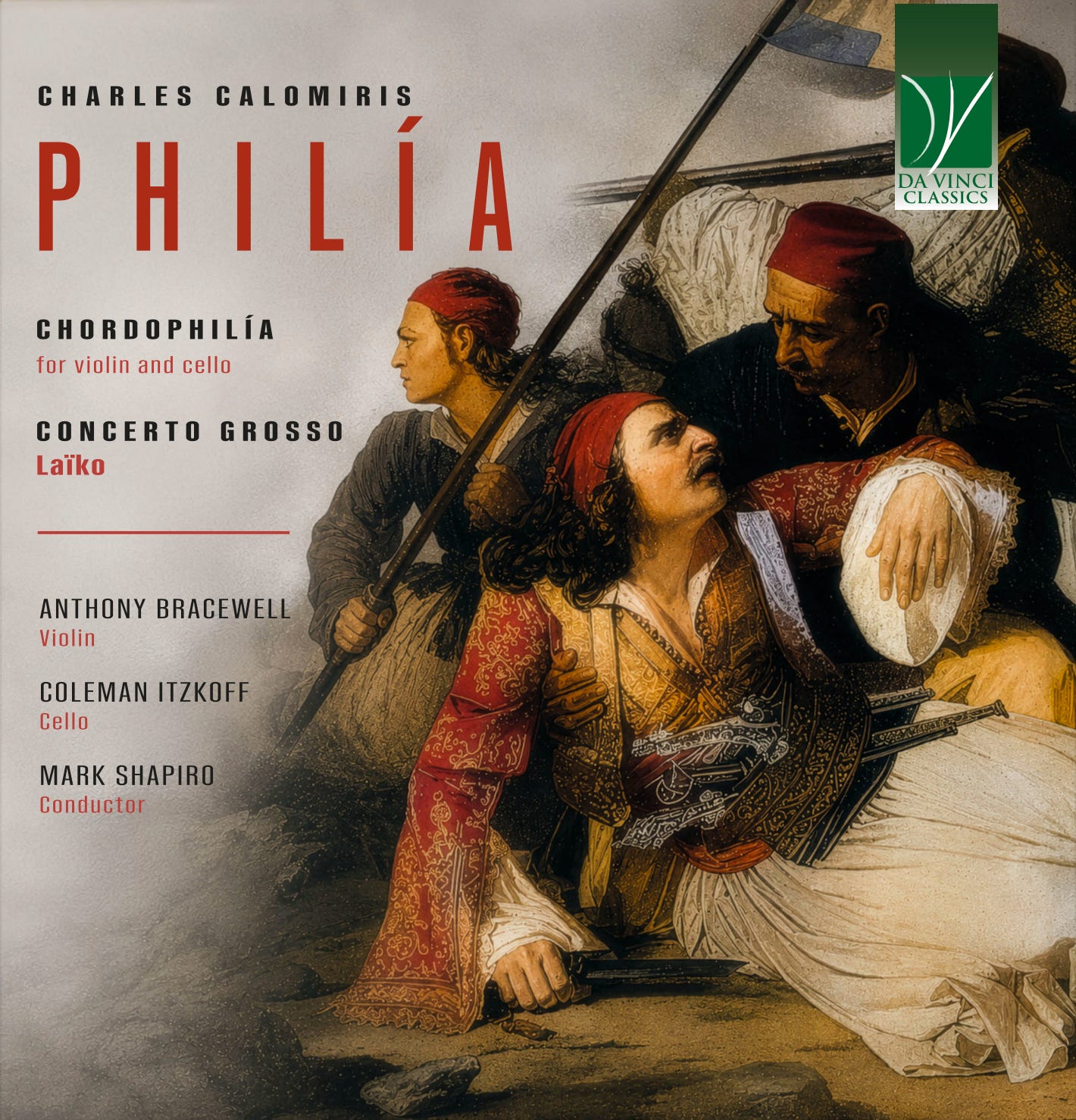
During my recent trip to the Peloponnese, it occurred to me to use AI to try to locate a poem I had known about, but never read, about my grandfather’s great-grandfather, the priest and Greek Revolutionary War hero, Ioannis Papa-Kalomiris, who was a member of the Filiki Eteria, the leaders who launched the Revolution. I was thrilled when Grok came back to me with the full text, a lament written as a sort of obituary that was circulated during the war in the form of a mirologi – a lament sung to inform his comrades that he had been killed and beheaded at the Battle of Vasilika (near Corinth). His head was carried by the Ottomans on a pike during the Battle of Thebes.
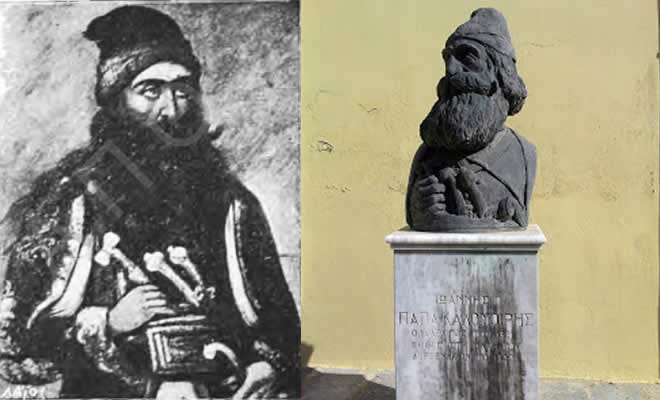
“I did not catch up with them in time; the Turks got ahead of them and killed the best ones: Anagnostis Petmezas, his son Sotirakis, Giannetas from Mystras, the famous Oikonomos Papa-Kalomoiris, and about 60 soldiers from Fanari, Kalavryta and Mystras.”
This is the contemporary eyewitness account by Kolokotronis’s aide-de-camp of the death of Papa-Kalomoiris (Οικονόμος Ιωάννης Καλομοίρης / παπα-Καλομοίρης of Vordonia, Laconia), who fell fighting in the Ottoman cavalry ambush at Vasilika alongside Anagnostis Petmezas and others. Fotakos arrived too late to warn or reinforce the Greeks after Kolokotronis spotted the trap and sent him. The account appears in Fotakos’s Απομνημονεύματα περί της Ελληνικής Επαναστάσεως (and is quoted in modern historical treatments of the fighter). Papa-Kalomoiris’s head was later sent to Constantinople; his body was recovered and buried with military honors near the church of Agia Paraskevi at Vasilika.
The poem (which can be read at the bottom of the blog) was recorded and preserved by the folklorist Agis Theros (Spyros Theodoropoulos) and first published in the Spartiatikon Imerologion of 1904. There is no known musical recording of the mirologi about Papa-Kalomiris, but the Peloponnesian laments from that era tend to follow well-known melodic patterns, modal choices, and instrumentation. I was able to set the poem to music fairly quickly, using the Phrygian mode and a ¾ tempo, which seemed to fit the words perfectly. I hope to include it in one of our albums soon. I had an eerie feeling of his spiritual presence as I worked on it, perched in a café less than two miles from his hometown, Vordonia.
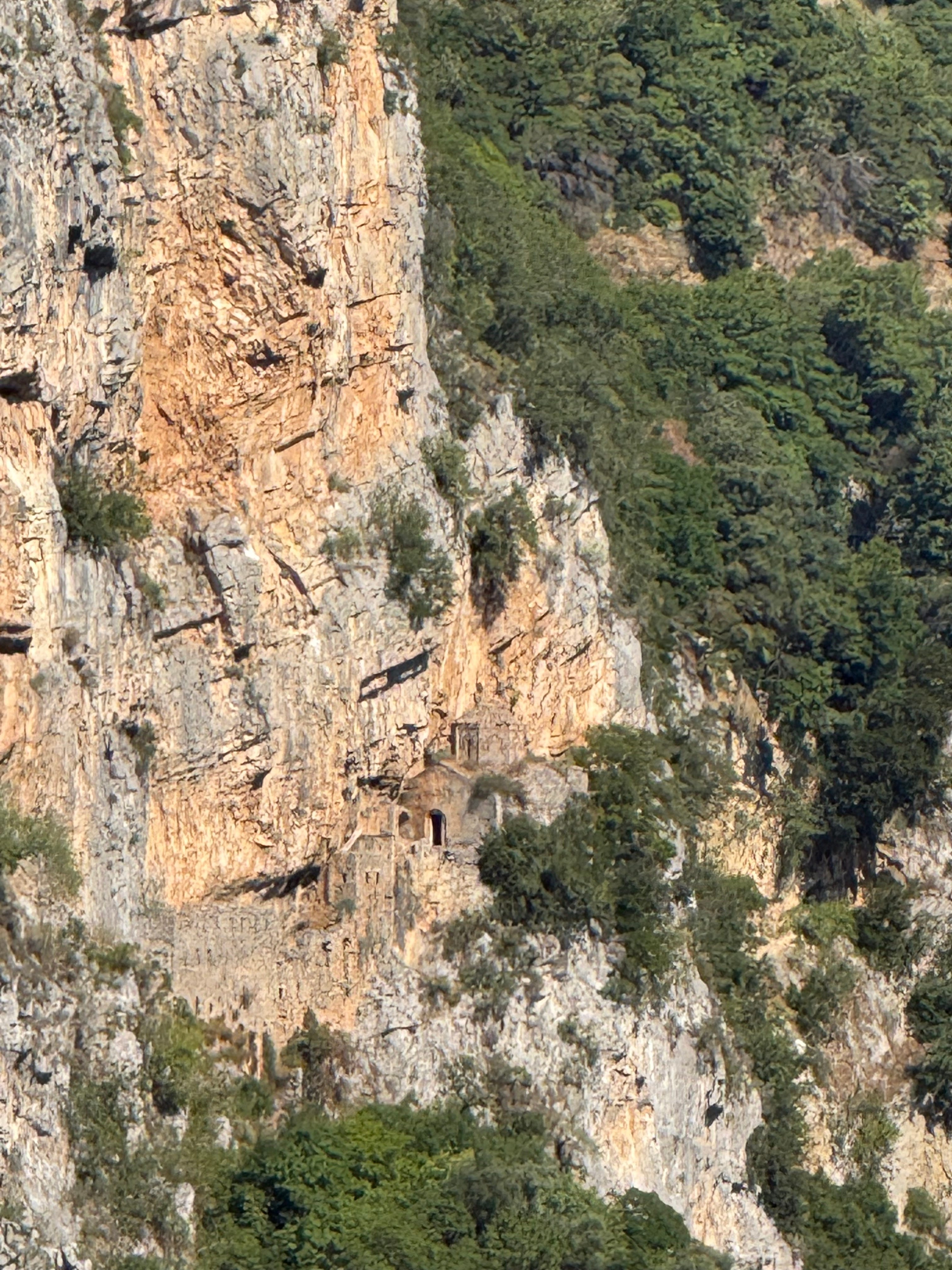
While in Greece, I also formed some new friendships with living people. Greek composer and producer, Nick Voyages, President of the Hellenic Arts Institute, became familiar with my work and invited me to join the Institute and work with him on a major collaboration. We are currently trying to raise funds for a concert that would feature both of our works in a multi-media orchestral program. Stay tuned.
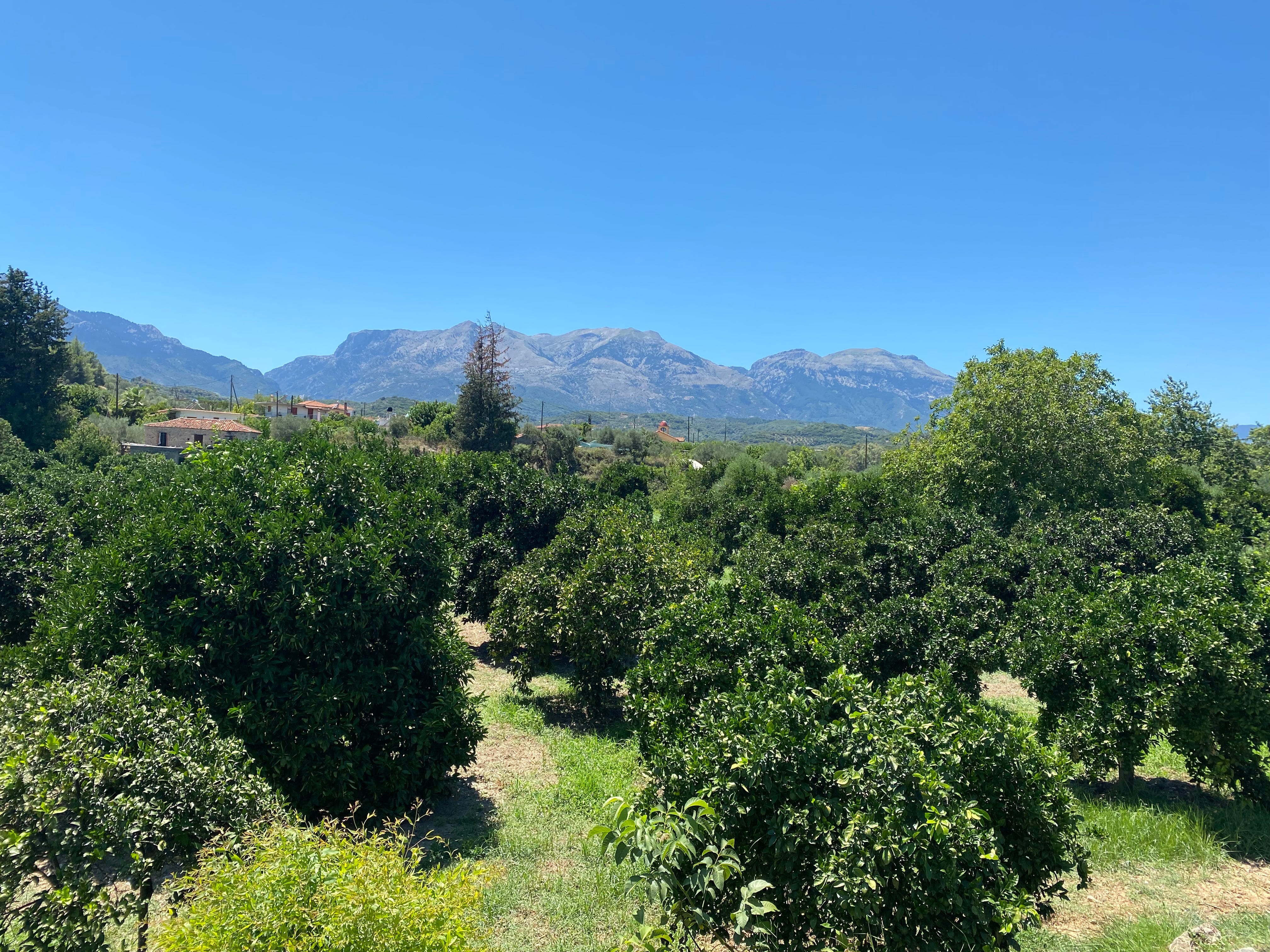
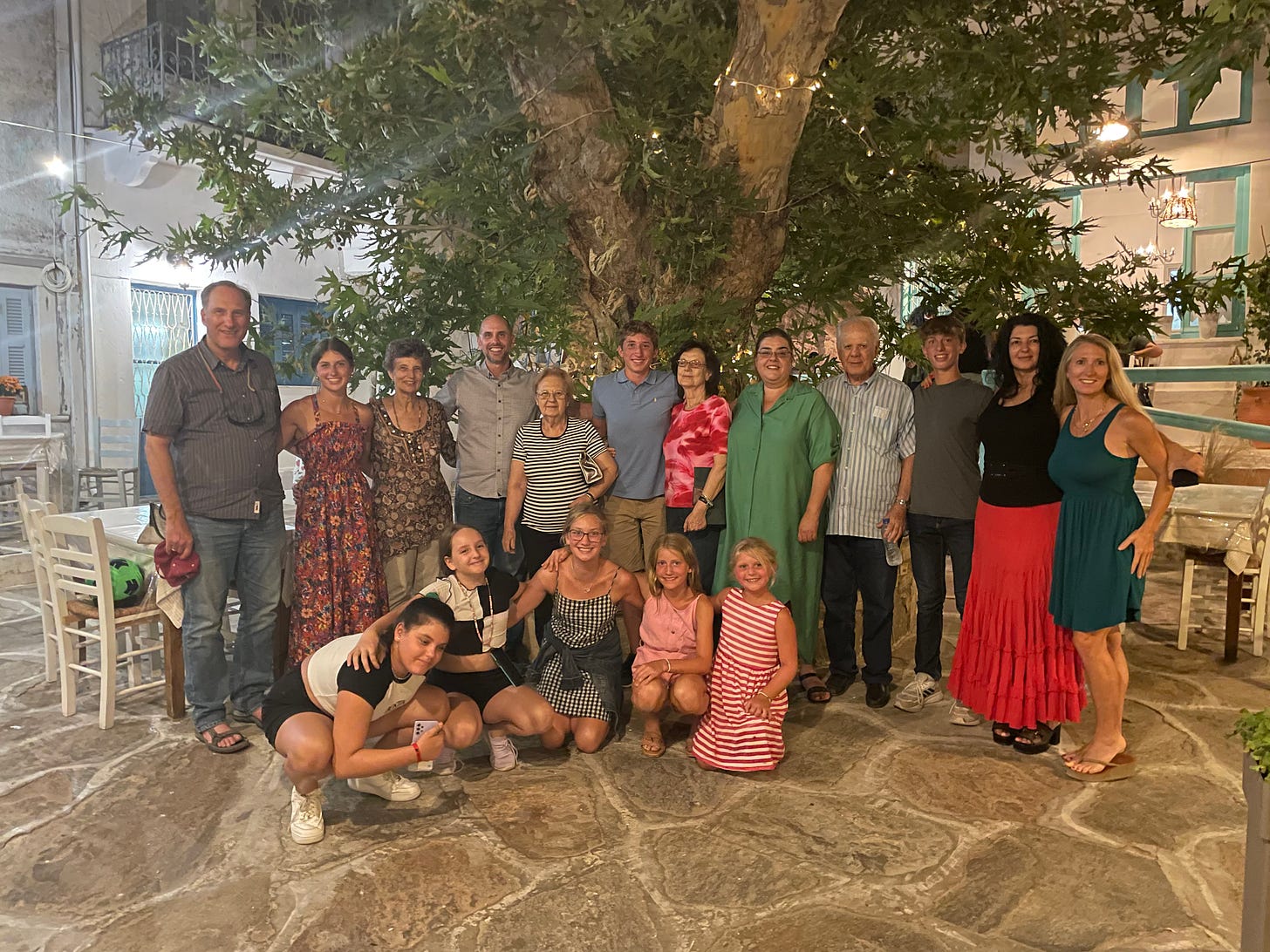
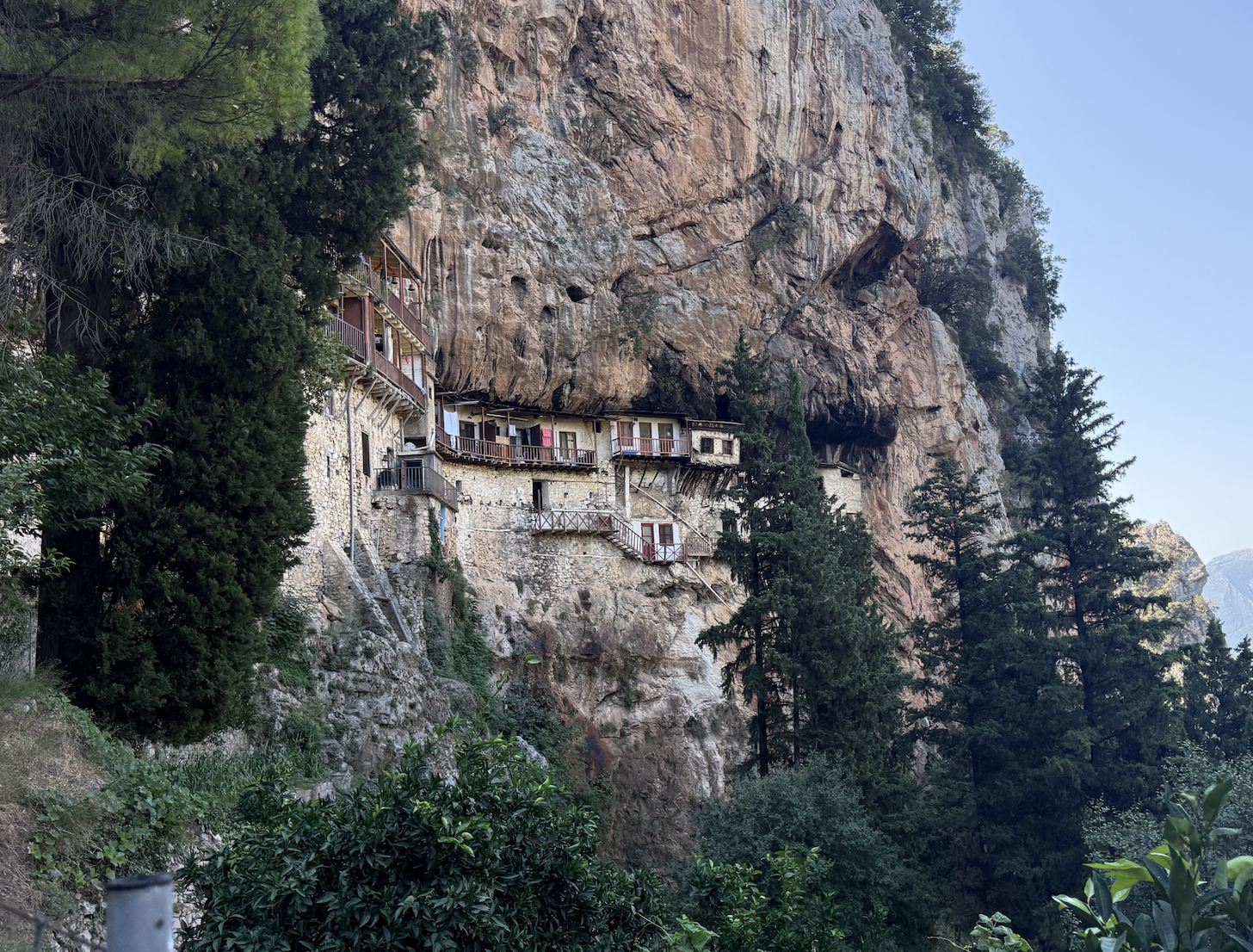
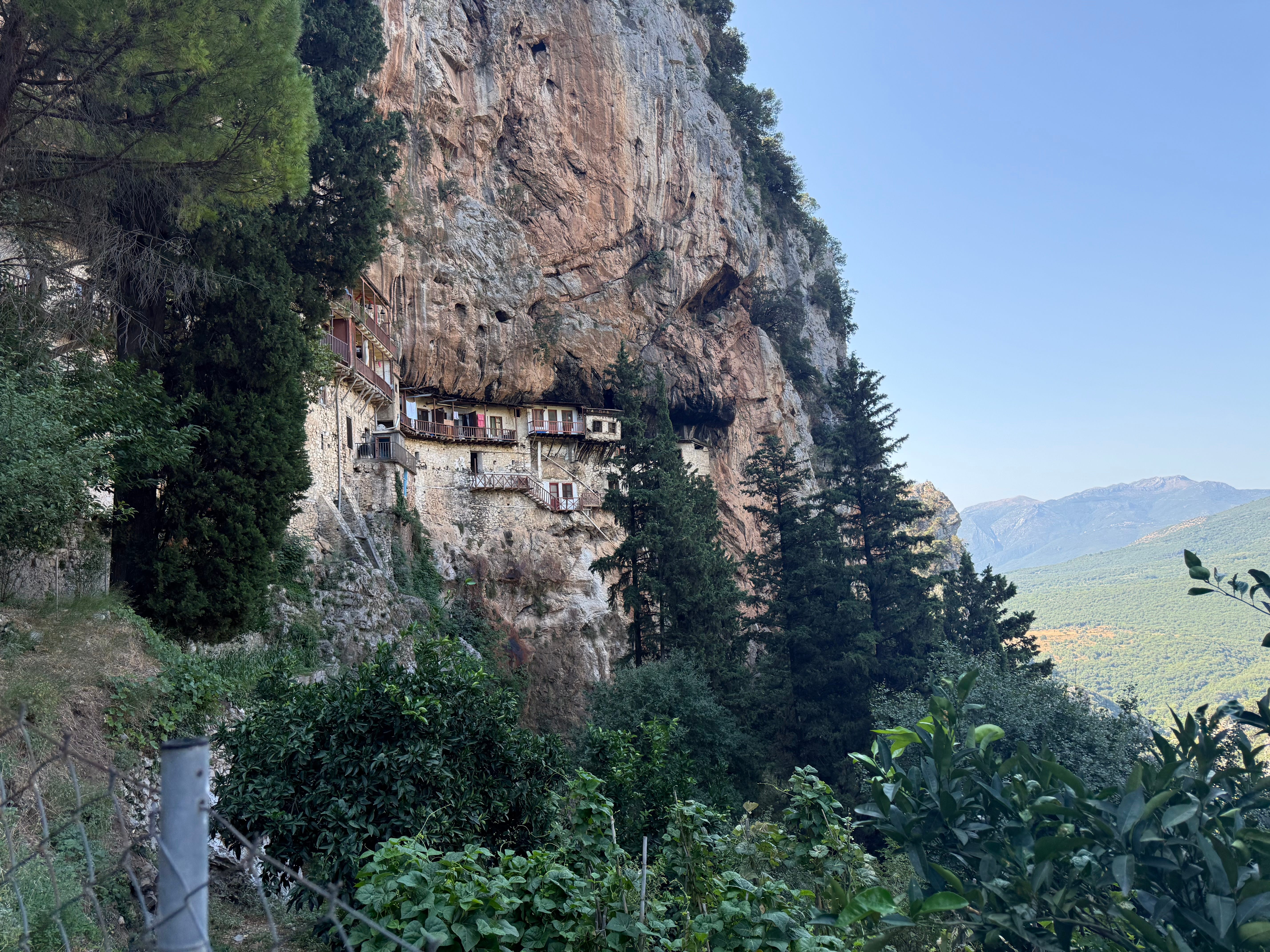
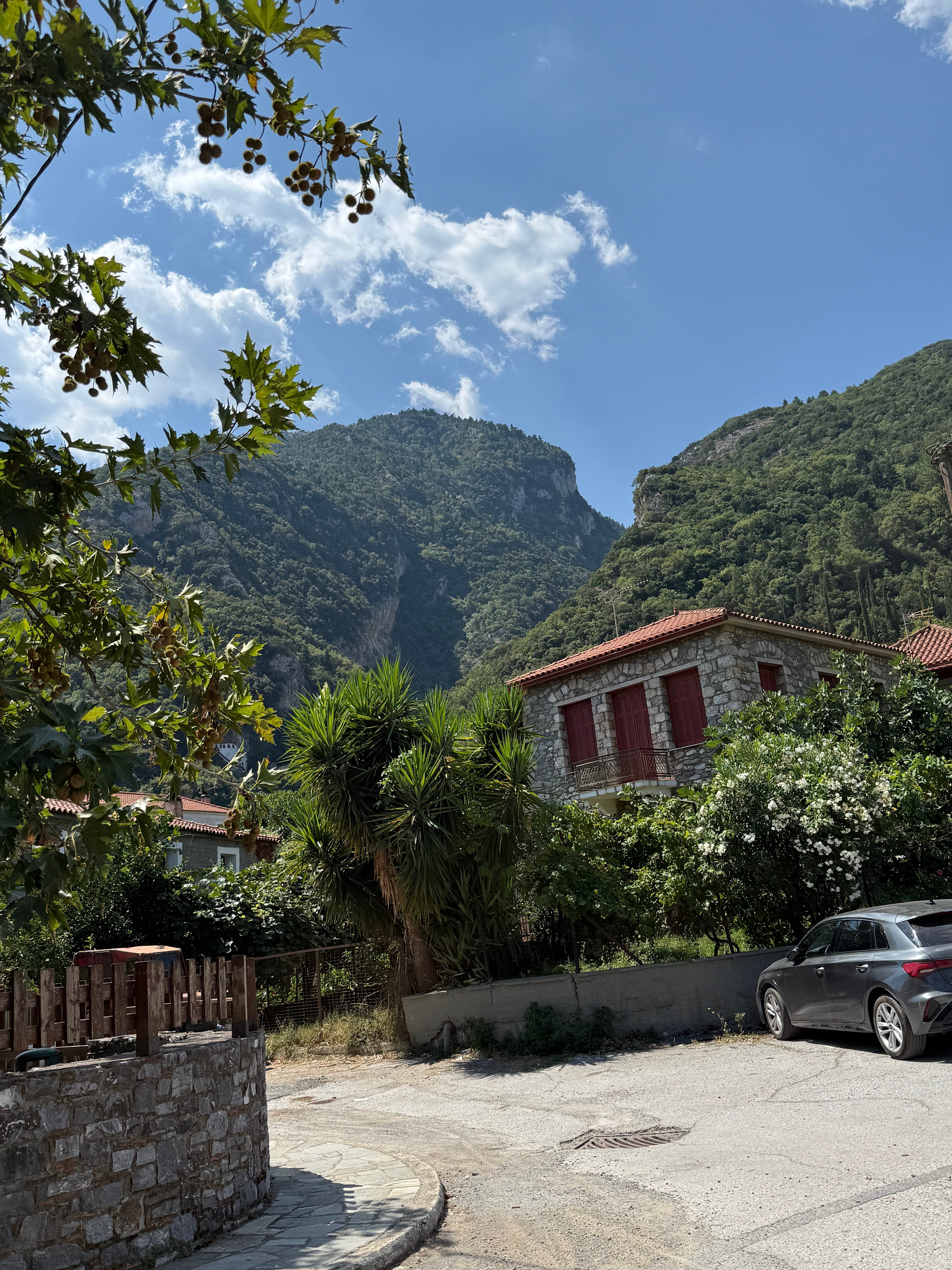
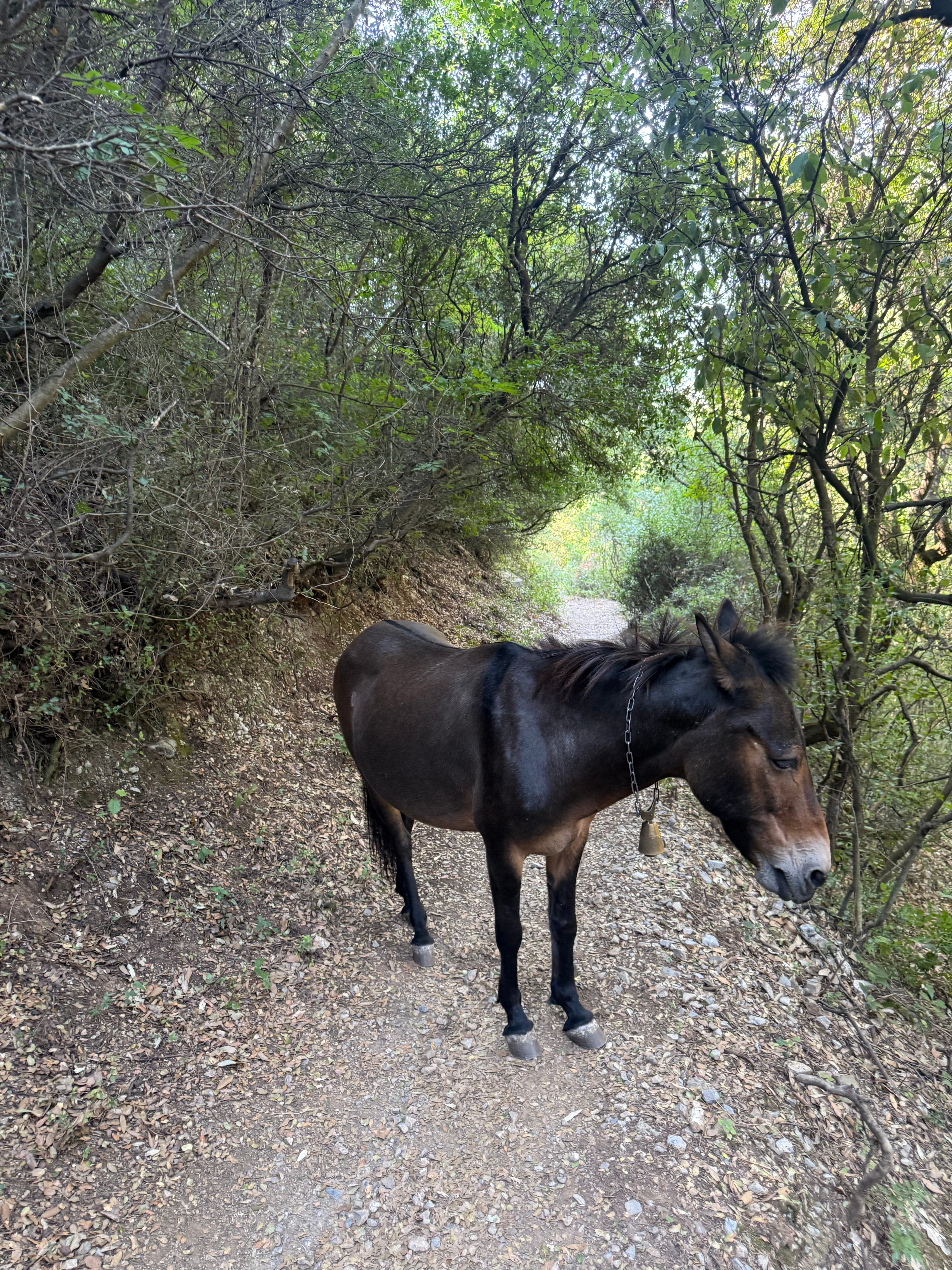
My wife, Nancy, planned a wonderful trip to the Peloponnese for us, which featured a breathtaking hike through the Lousios Gorge, guided by our new friend, Costas Georgopoulos. Our hike in the gorge did have a thrilling moment when a mule decided to block our path, tried to bite Costas, and nearly kicked Nancy. Costas is also an accomplished musician, and one that shares my affinity for the great Greek music of the 1960s. I am hoping to have him guide me next summer on an ambitious trip to Taygetos.
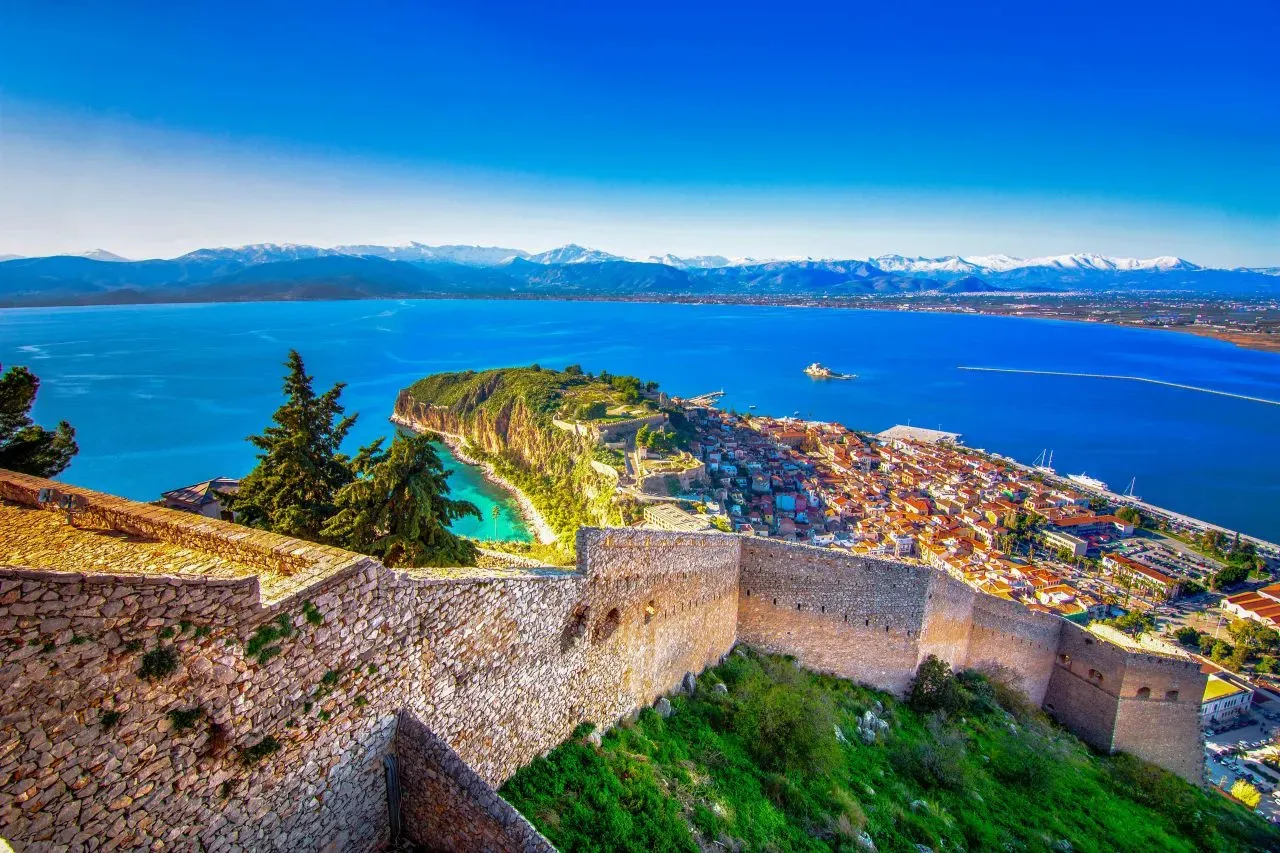
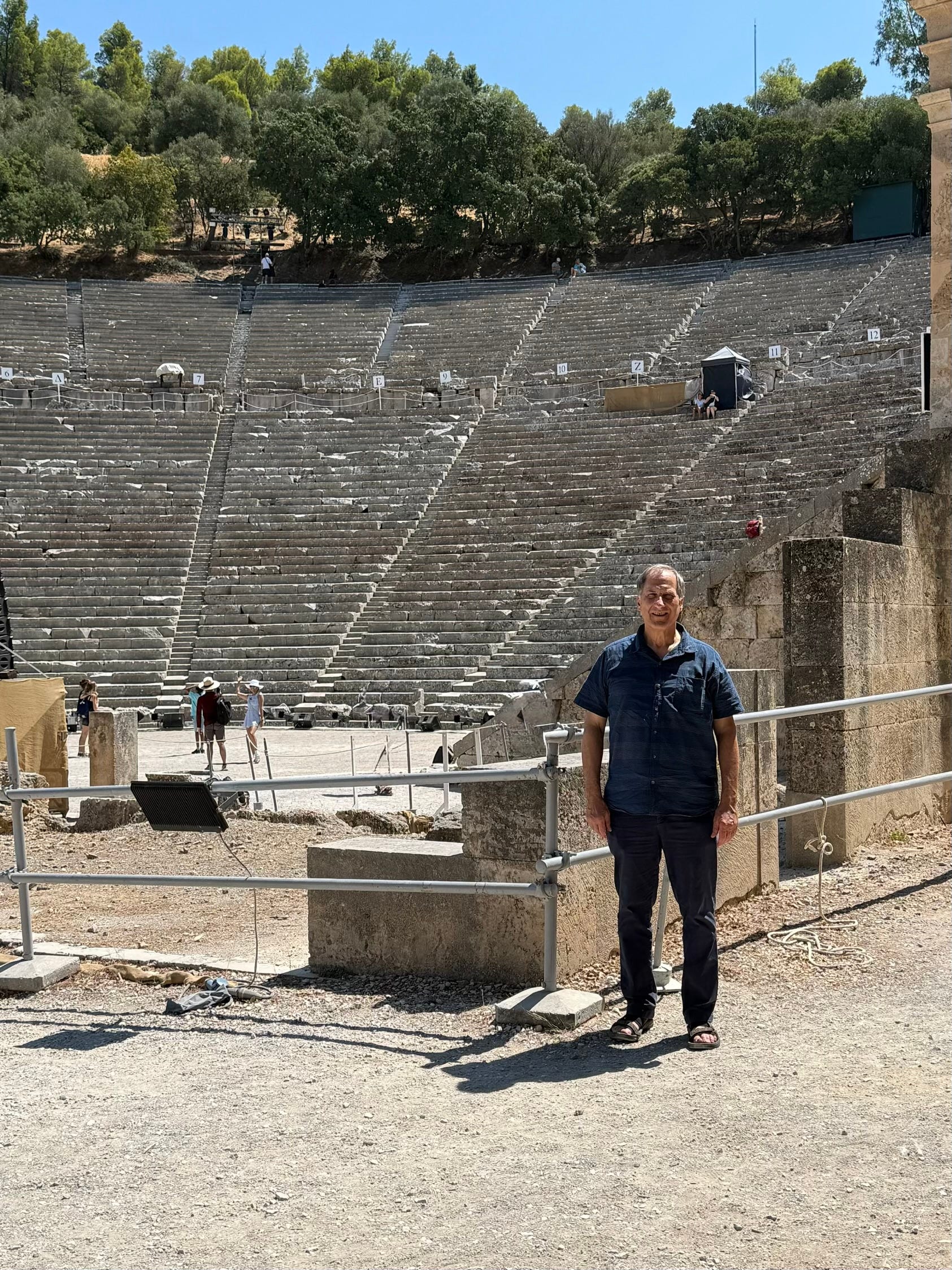
We also made time to tour the Tripolis war museum. The meatballs I had for lunch reminded me of my paternal grandmother’s recipe (lots of cumin). We also strolled through my favorite city (Nafplion), and visited two ancient sites: the ancient theatre of Epidavros, and the Palace of Nestor near Pylos. Pylos is not far from Kalamata, known to all the world for its delicious olives. Olives, their oil, and the use of oil in healing have been a constant theme of Greek culture for all known history. The word for olive oil (éleon) – which has been used in the Greek language for at least five thousand years – is also associated in the Orthodox tradition with God’s mercy (as in the phrase Kyrie Eleison). Driving from Sparta to Kalamata to Pylos, one sees millions of olive trees, and it becomes clear why this region of Greece has been at the center of Greek agriculture since at least the Bronze Age.
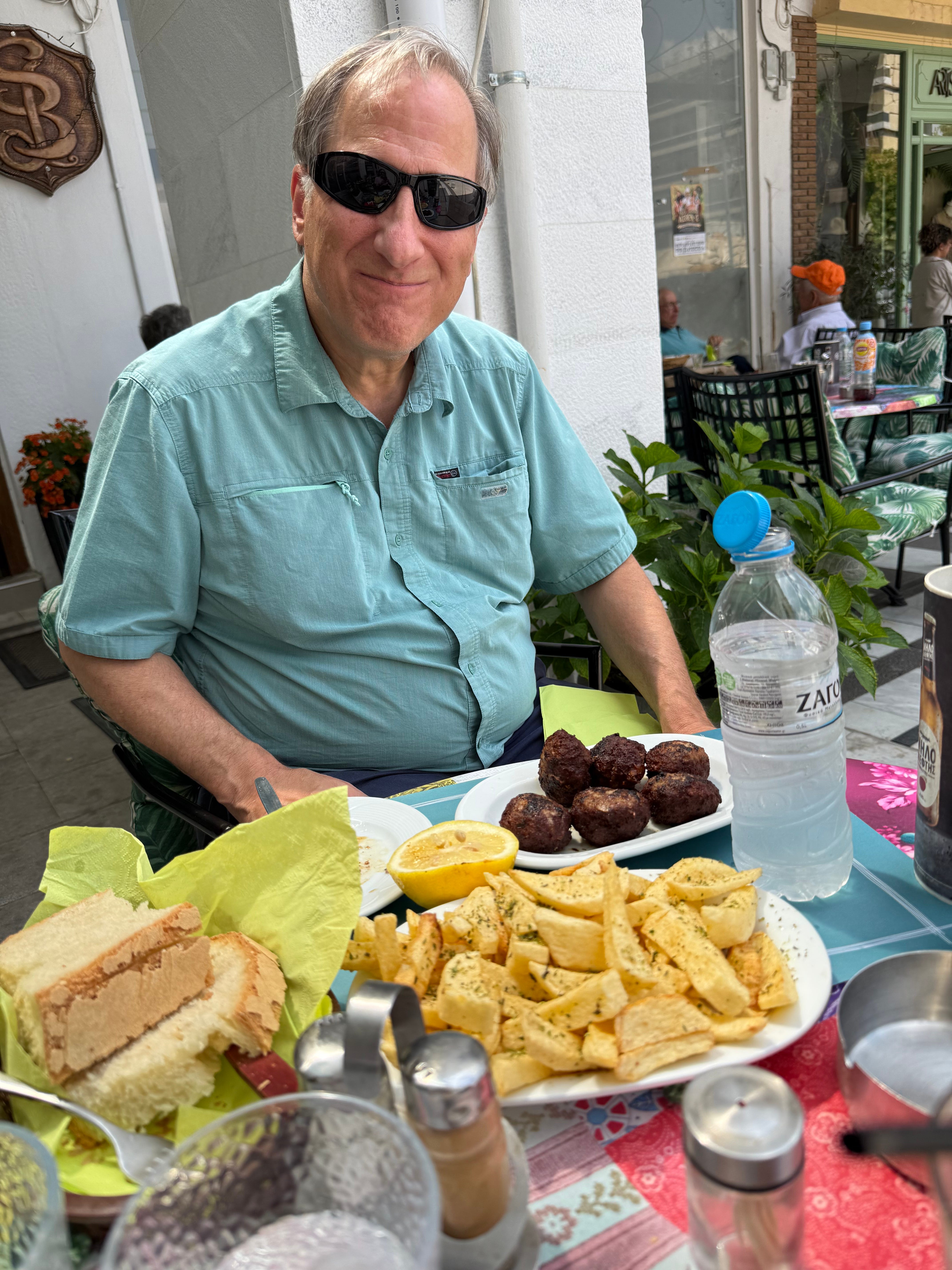
I am happy to report that the younger generation in our family understands the importance of olive oil. When we visited our daughter, Zoi, in California in July, she planned a delightful tour and olive oil tasting for us at Gold Ridge Organic Farms, inland from Bodega Bay. It was great fun, and the oil was delicious. There is some room for improvement, however (no Greek varieties of olives in evidence at Gold Ridge).
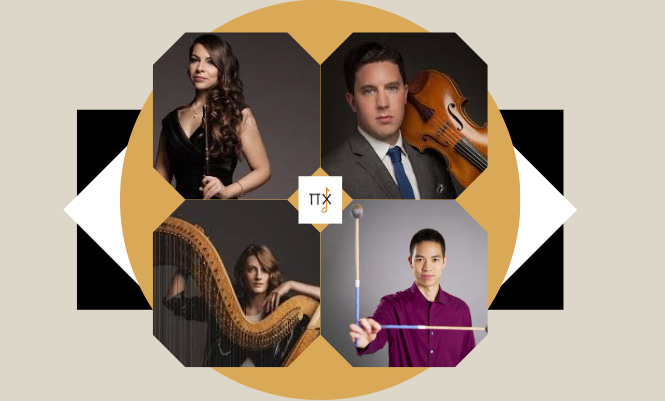
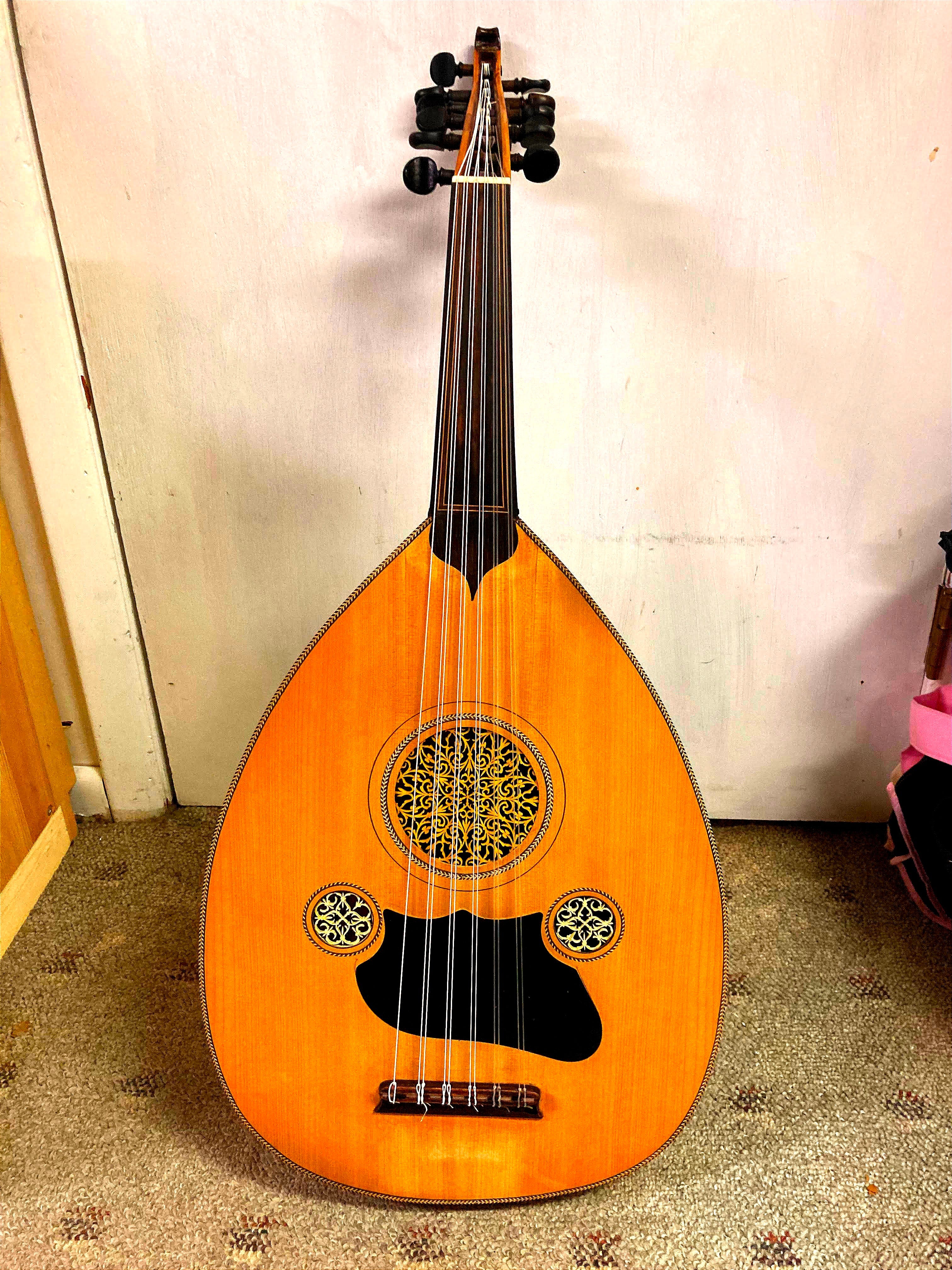
Meanwhile, back in New York, this summer saw a new kind of experimental collaboration for me, one in which I was playing bouzouki with six friends in a septet featuring some exotic instrumentation: Ara Dinkjian (oud), Kai Hirayama (woodwinds), Godfrey Furchtgott (violin and viola), Oren Fader (guitars), Shanir Blumenkranz (bass and gimbri) and Oliver Xu (marimba, glockenspiel, drums and tambourine). We recorded improvisational covers for two solid days, and have two more days of work scheduled for the fall. More on that in due course.
Looking forward to the fall in New York, I will also be collaborating with my friend, Mark Shapiro, again. This time Mark will be conducting his Cantori New York in recordings of several a cappella hymns from my recently completed Divine Liturgy. It was a blessed summer, and I am excited about the schedule for the fall. All of it makes me reflect on how much I rely on my friends and family for so many things, and how lucky I am to find great people to collaborate with wherever I go.
Greek text of the Papa-Kalomiris Mirologi
Τρίτη, Τετάρτη θλιβερή, Πέμπτη φαρμακωμένη,
Παρασκευή ξημέρωνε, να μη ’χε ξημερώσει.
Σκοτώθη ένας ντελή-παπάς, ο παπα-Καλομοίρης,
που ’ταν άξιος στον πόλεμο, άξιος οικονόμος.
Σούρνει μπαϊράκι κόκκινο, πράσινο και γαλάζιο,
σούρνει και τ’ αδελφούλια του που ήτανε παλικάρια,
που ήταν αδέρφια γκαρδιακά και πολυαγαπημένα.
Ψιλή φωνίτσαν έσουρε και βαρυαναστενάζει,
των αδερφιών του φώναξε, των αδερφιών του λέει:
– Πού είσαι, Νικόλα μου, αδερφέ και συ Παρασκευά μου,
κι εσύ, Γιώργη παιδάκι μου, ογρήγορα προφτάστε,
φτάστε το γληγορότερο, για να με καταφτάστε,
να πάρτε το κεφάλι μου, να πάρτε τ’ άρματά μου,
να πάρτε το κεμέρι μου με δεκοχτώ χιλιάδες.
Να ειπήτε των παιδιώνε μου να μη με παντυχαίνουν,
ποτέ να μη με καρτερούν, να μη με περιμένουν,
τι εμένα μ’ έβαλε ο πασάς στη Θήβα μπαϊριαχτάρη,
στους πεθαμένους Μπίμπαση, στους ζωντανούς να κραίνω.
English translation
Tuesday, Wednesday sorrowful, Thursday poisoned,
Friday was dawning—would that it had never dawned.
A bold priest was killed, Papa-Kalomoiris,
who was valiant in war, a worthy oikonomos (steward/priest).
He trails a red banner, green and blue,
he trails his little brothers too, who were fine young men,
who were heartfelt brothers and deeply loved.
In a thin little voice he cried out and sighed heavily,
he called to his brothers, to his brothers he says:
– Where are you, my Nikola, brother, and you my Paraskevas,
and you, little Giorgis my child, hurry and catch up,
come as quickly as you can so you may overtake me,
to take my head, to take my arms,
to take my money-belt with eighteen thousand.
Tell my children not to wait for me,
never to expect me, never to wait for me,
for the pasha has made me banner-bearer in Thebes,
a bimbashi among the dead, to rule among the living